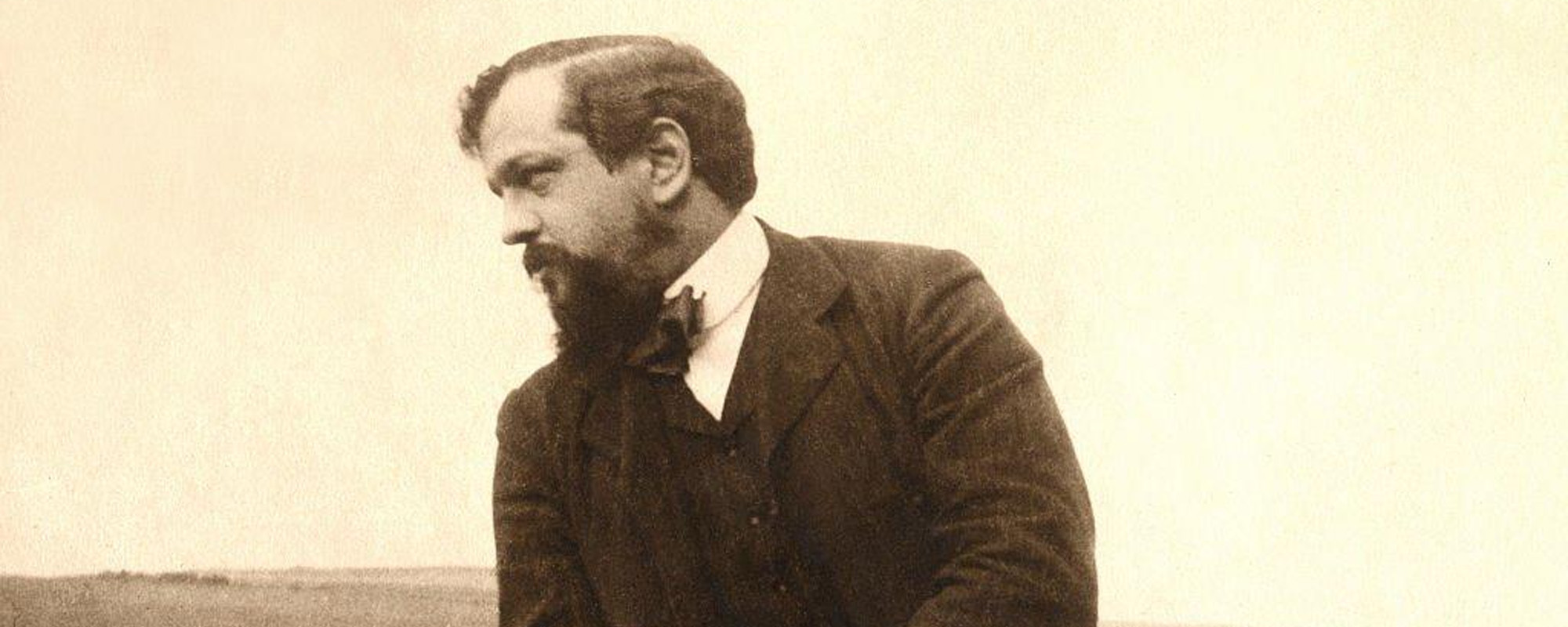
Composer Profile: Claude Debussy
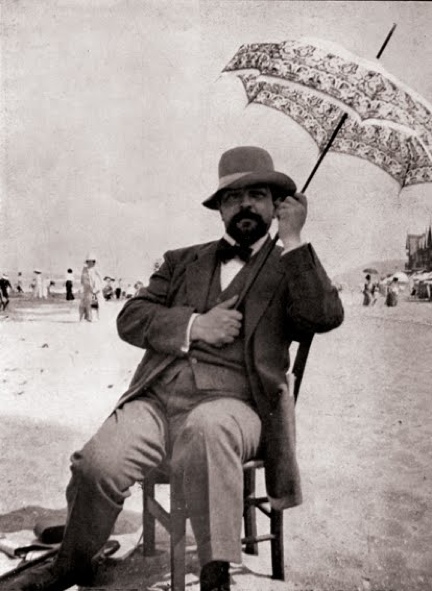
by Elyse Morris, DMMO Annual Fund Director and Board Liaison
Pierre Boulez, French composer and one of the most dominant figures in modern classical music, once said that modern music was born in the opening, ethereal notes of Claude Debussy’s 1894 symphonic poem Prelude to the Afternoon of a Faun. Whether that was truly the beginning of modern music or not, none can deny the pivotal position Debussy holds among 20th century composers.
Born near Paris in 1862 to a family utterly uninvolved in music and with little financial means, Debussy’s career as a composer was as unlikely as it was spectacular. Debussy’s musical talent was first discovered when, during a stay with his aunt in Cannes to avoid war-torn Paris, he participated in his first piano lessons at age eight. By 10, he was enrolled in the premiere music school in France – the Paris Conservatory – where he studied piano, harmony, organ, and composition for the next 11 years, often disappointing his teachers for his failure to follow the prevailing “rules” of composition. Though far from a star academic pupil, Debussy’s time at the Conservatory culminated with him winning the 1894 Grand Prix de Rome, a coveted scholarship that afforded winners the chance to study at the Académie de France in Rome, which he did (unhappily, it should be noted) from 1895 to 1897.
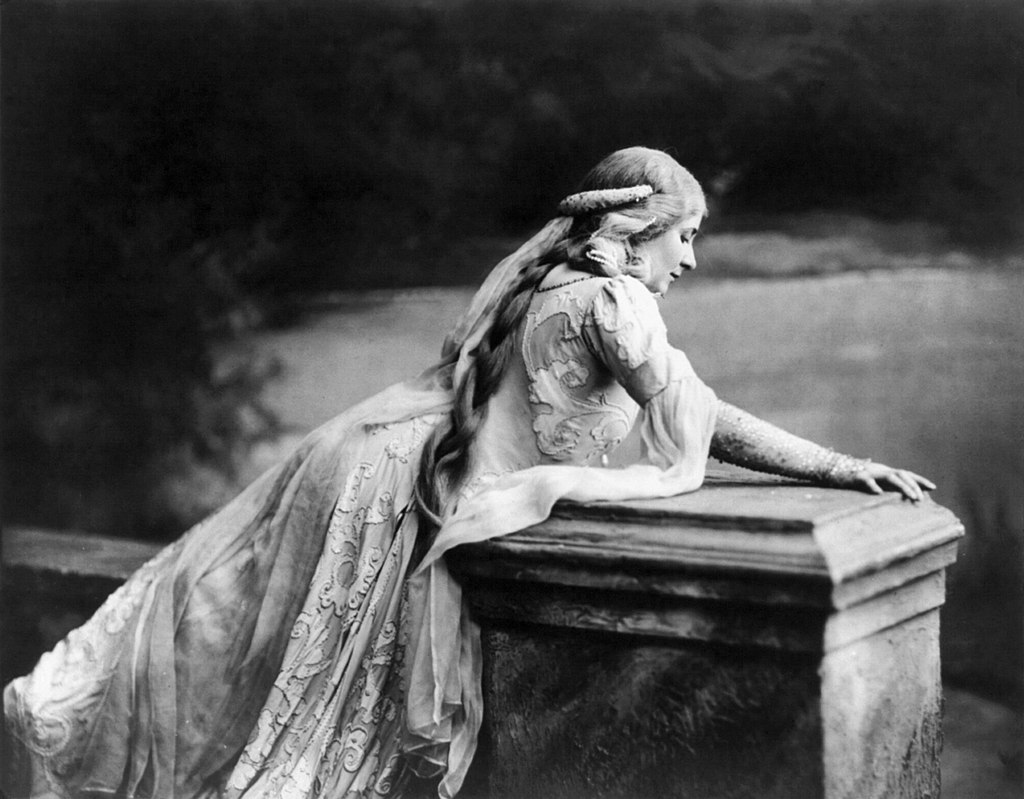
Despite first making a name as an instrumental and art song composer, Debussy always knew he would write for the stage. Following many false starts, Debussy realized he needed a very specific type of story to work with and told his teacher as much in 1889, stating that his ideal librettist would be “someone who only implies things, who would allow me to graft my dream on to his.” When Debussy attended the May 17, 1893 premiere of Maurice Maeterlinck’s play Pelléas et Mélisande he knew he had found the one. He traveled to Maeterlinck’s home in Ghent in November to secure permission to complete an operatic adaptation of the play and completed a first draft of the first act by early 1894. Despite the quick start, it took several years to get the piece off the ground. The opera, Debussy’s only, premiered on April 30, 1902 at the Opéra-Comique in Paris to mixed reviews – groups of Debussy’s admirers from the Conservatory offset the objections voiced by the Opéra-Comique’s regular audiences. Despite the cool initial reception, the piece quickly became a staple in the repertory alongside other celebrated works of his such as La Mer, “Claire de Lune” from the Suite Bergamasque, his String Quartet, and his many song cycles.
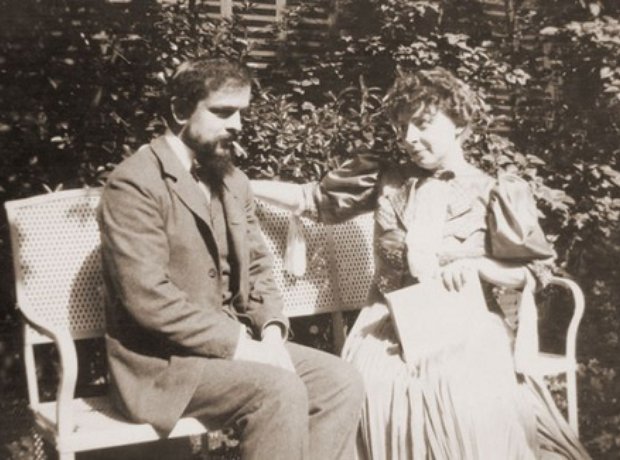
Debussy’s personal life was as active as his professional life, though less respected by far. At 18, he began what became an eight-year-long affair with Marie Vasnier, a married woman who was also his first muse. In 1893, he moved in with Gaby Dupont without marrying her, then had an affair with singer Thérèse Roger, whom he proposed to. The proposal was called off amidst the upheaval created by several anonymous letters circulating Paris condemning Debussy for his treatment of both women as well as his financial irresponsibility. In the late 1890s, he abandoned Dupont for good in favor of her close friend Lilly Texier, whom he married in 1899. The marriage was brief, lasting only five years due to his irritation with her “intellectual limitations.” He caused another scandal in 1904 by starting an affair with Emma Bardac (pictured with Debussy below), the married mother of one of his piano students. Their illegitimate daughter was born in 1905 and after divorcing Texier, he married Bardac in 1908. None of these forays garnered him much respect, particularly because Bardac was also linked to Gabriel Fauré, another prominent French composer who was in the same social circles as Debussy. Debussy spent his final years dealing with serious illness and died in 1918 of colorectal cancer.
We are excited to program Debussy’s celebrated opera, Pelléas et Mèlisande during our 2024 Summer Festival – DMMO’s first production of the perennial favorite. [Visit www.dmmo.org/tickets or call the box office at 515-961-6221 to learn more!]