Finding the Next Generation of Artists
by General & Artistic Director Michael Egel
Few things excite me more than hearing a young singer deliver an exceptional audition for Des Moines Metro Opera's Frank R. Brownell Apprentice Artist Program. Every year, a singer walks into the room and reminds us exactly why we do this work. It puts wind in my sails and reinforces my belief in our mission's importance. The sheer number of young people eager to express themselves through singing and the human voice gives me tremendous optimism about the future of our art form.
Autumn's arrival signals one of the busiest periods of our year. A new fiscal year begins, our focus turns increasingly toward the coming season's repertory, and the national audition process gets underway. What may seem like a straightforward series of auditions is actually a complex, time-consuming undertaking, involving hundreds of hours of preparation before we hear the first singer in person.
Program Director Lisa Hasson and Director of Artistic Administration Allen Perriello expertly manage the initial screening process. Every applicant submits a résumé, performance videos, and other information for consideration. From that pool, we select the artists we want to hear live in one of seven cities around the country.
This year, 1127 artists applied for consideration: 526 sopranos, 218 mezzo-sopranos, 3 countertenors, 162 tenors, 156 baritones, 44 bass-baritones, and 18 basses. Applications have increased exponentially over the last several seasons. From that group, we invite nearly 450 singers for live auditions. The subsequent process of notifications, scheduling, pianist coordination, and travel planning is an enormous undertaking for both our staff and the artists themselves.
Expanding access to our auditions has been an important goal for DMMO. Rather than requiring everyone to travel to Iowa, we bring the process to several locations across the country. This year's tour included San Francisco, Houston, Cincinnati, New York, Philadelphia, Chicago, and Des Moines. We also offer a limited number of video auditions. In most cities, conservatories and universities generously provide audition space, pianists, and sometimes housing, helping us extend our reach while keeping expenses manageable.
Our audition pianists are another essential part of the process. These highly skilled musicians specialize in audition work and must sight-read an enormous range of repertoire while responding intuitively to each singer's individual musical approach. There is no preparatory rehearsal. Each artist has approximately eight minutes to make an impression, beginning with an aria of their choosing and followed by a contrasting selection chosen by our panel. Eight minutes to demonstrate vocal ability, musical intelligence, artistic individuality, and professional potential. It takes considerable experience and instinct to recognize the artists who will thrive in our particular environment.
When we return home, Allen, Lisa, and I compare notes and begin formulating our priority lists. We send offers in phases over about two weeks, aiming to complete our roster by mid-November. We balance the needs of the coming season's repertory with opportunities for emerging artists, including covers and comprimario assignments. Most Apprentice Artists are eligible for two seasons with us, and many are eager to return for a second summer as their careers develop.
The average age of our participants is around 26, although there is no age restriction. Sometimes we encounter an extraordinary singer just over 30 whose larger voice type has taken longer to mature. Other times, a remarkably young bass arrives with a vocal maturity that knocks our socks off.
Young bass-baritone Bobby Frazier was just such a singer. We first heard him in 2024 and invited him back in 2026 after a year away. He has since joined the prestigious Cafritz Young Artist Program at Washington National Opera. Reflecting on his experience, he said: "I've been very lucky to call DMMO my summer haven for two seasons. My two summers with the deeply supportive artistic family at DMMO offered unique chances to explore bold, unconventional repertoire early in my career, along with some epic pickleball matches with friends."
We aren't alone in this annual search for emerging talent. Our colleagues at Santa Fe, Glimmerglass, Wolf Trap, Aspen, and San Francisco are engaged in similar audition processes. Singers often audition for multiple companies, weighing repertory, roles, and professional opportunities as they make decisions about their summers. We're delighted when we secure our first choices, but we also recognize that another company may offer exactly the opportunity a singer needs at that particular moment in their development.
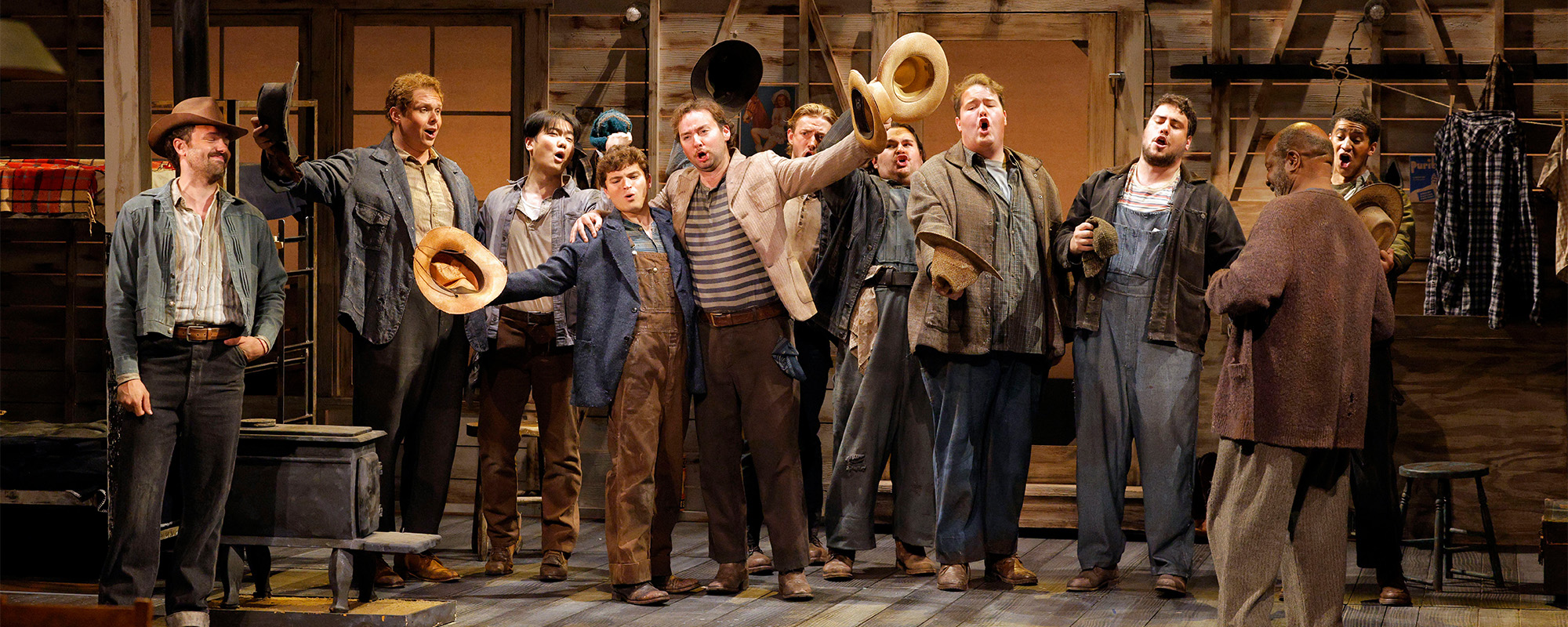
What makes me especially proud is that our Apprentice Artists aren't simply observing a professional company; they are contributing to it. They perform small roles, cover major assignments, and become members of one of the finest opera choruses in the country. They bring extraordinary energy and talent to our productions while gaining the experience and confidence needed to take their next professional steps.
Baritone Harrison Hancock, who joined us in 2025 and returned in 2026, described that progression beautifully: "My second season at DMMO allowed me to step into larger responsibilities than in my first season, including mainstage assignments and larger cover roles. The incredible professional development opportunities—paired with the camaraderie between fellow artists and staff—make a DMMO summer unforgettable!" Both Bobby and Harrison have gone on to major year-long professional development programs. Their experiences illustrate what we hope to accomplish: providing meaningful artistic opportunities, encouraging growth, and helping talented young singers move toward successful careers.
Our founder, Robert L. Larsen, often called the Apprentice Artist Program the "lifeblood of the organization." I think that description is as true today as ever. This program is an investment in the future of opera and in the artists who will shape its next generation.
I hope you'll join us Saturday, June 5, 2027, for the Apprentice Spotlight Concert, my favorite night of the year. We launch our summer festival with an aria from every Apprentice Artist. There is something wonderfully fitting about beginning the season with the voices of these rising artists. I hope you'll be there to experience this remarkable group for yourself. They are not just the future of opera; they are an exciting part of its present.