The History of The Tales of Hoffmann
by Kristin Rasmussen
On October 5th, 1880, Jacques Offenbach died in his Paris apartment, supposedly with a score of Les contes d’Hoffmann (The Tales of Hoffmann) in hand. Though the immediate obituaries in the English press were not kind to him, and many “elevated” music critics viewed him as a less serious musician, Offenbach’s Opéra-bouffes and Operettas have remained popular. But for Offenbach, The Tales of Hoffmann was to be the work that would launch him onto the stage of “serious” music and bridge out of lighter music.
Four months after his death, on February 10th, 1881, The Tales of Hoffmann premiered at the Opéra-Comique in Paris, and in the 145 years since its premiere, Offenbach’s final opera has provided endless fascination to audiences. From its beginnings as an 1851 play adaptation of a few of E.T.A. Hoffmann’s stories to its premiere in Paris in 1881, the tale of The Tales of Hoffmann is complicated and fraught with disagreements on how the opera should be performed and what music should be included or excluded and has become a niche filled with questions of historical performance and determining the composer’s intentions.
E.T.A. Hoffmann (1776–1822) was a German Romantic author of fantasy and gothic horror, as well as a musician, composer, and influential music critic. His literary works were groundbreaking, including “Der Sandmann” (1816), a pioneering work of horror fiction, and his novella Mademoiselle de Scuderi (1819), which is viewed as one of the earliest examples of crime fiction. Offenbach, and the opera’s librettist, Jules Barbier, were not the only ones to reimagine Offenbach’s works into musical adaptations. Tchaikovsky’s The Nutcracker (1892) comes from Hoffmann’s novella The Nutcracker and the Mouse King (1816); Léo Delibes' ballet Coppélia is based on Hoffmann’s “Der Sandmann"; and Robert Schumann's piano suite, Kreisleriana (1850), is based on a recurring character from three of Hoffmann’s novels, Johannes Kreisler. In 1851 Barbier and fellow librettist Michel Carré produced a play at the Odéon Theatre in Paris, a mash-up of three of Hoffmann’s works. Jacques Offenbach attended this play, and the subject matter would sit with him for the next 25 years. After returning to Paris from America in 1876, he learned that Barbier had adapted the play for French composer Hector Salomon (1838–1906). Though music had already been composed, Salomon willingly handed the project off to Offenbach, who began work immediately on his score.
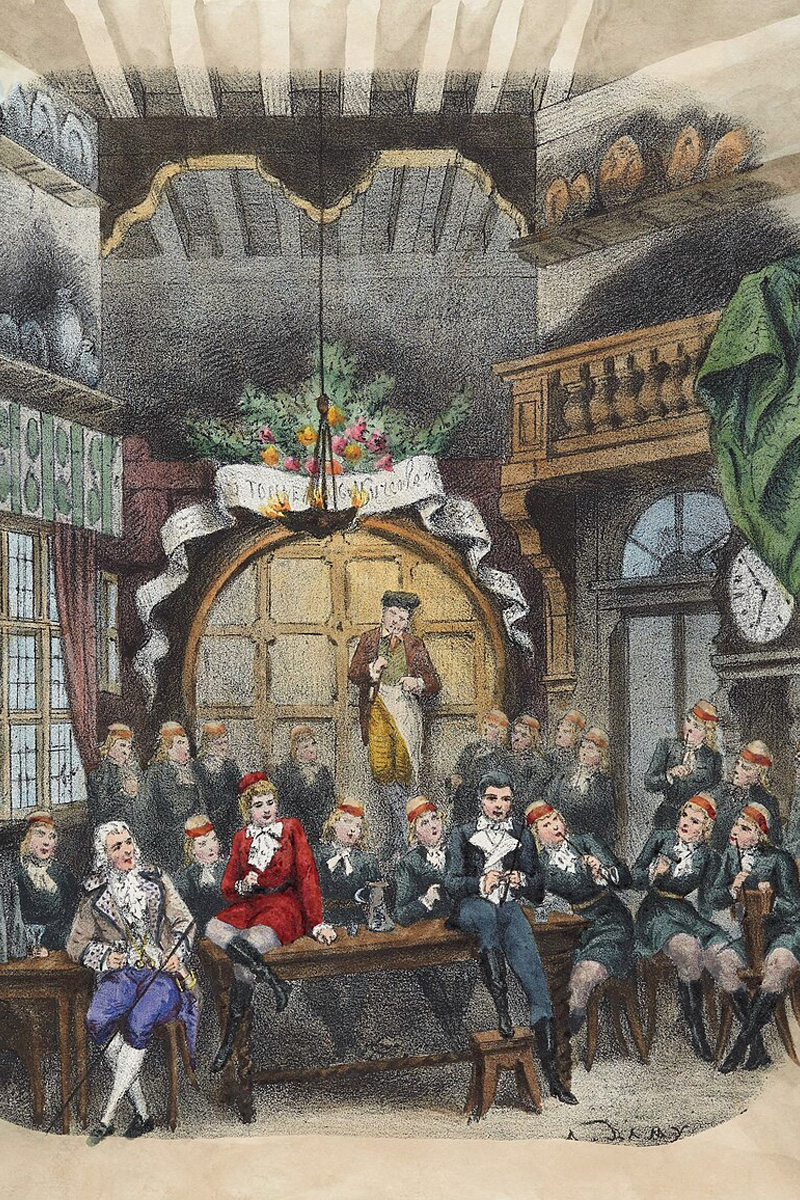
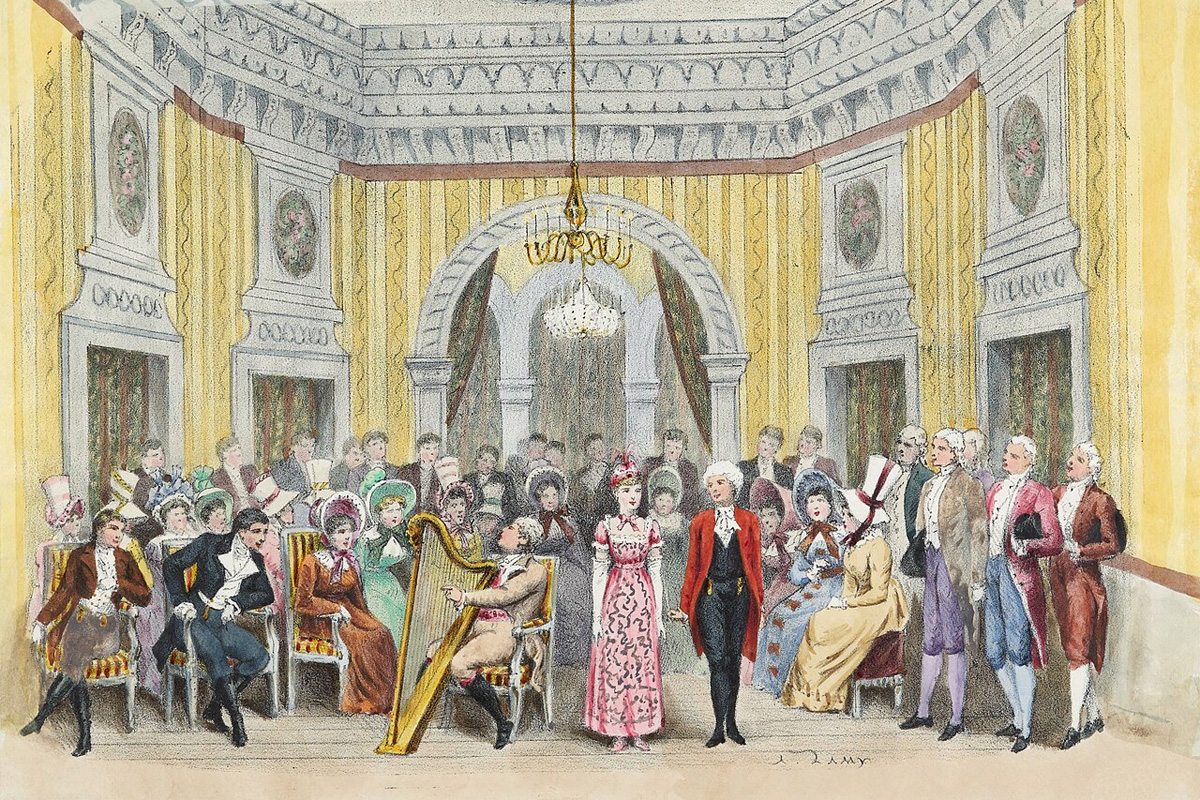
The story of Offenbach and Barbier’s The Tales of Hoffmann closely follows the 1851 play and is derived from three of Hoffmann’s short stories, each centered around a female love interest. These three love interests receive their own acts and are sandwiched by a prologue (Act I) and epilogue (Act V) in which Hoffmann is depicted as telling these stories while awaiting his latest love, the prima donna Stella, who is recognized as a combination of the three earlier loves. Act II comes from “Der Sandmann” (The Sandman, 1816) and features the automaton Olympia, whom Hoffmann becomes infatuated with before discovering her mechanical origins. Act III is derived from “Rath Krespel” (Councilor Krespel, 1818) and focuses around Hoffmann’s lover Antonia, who has been sequestered by her father and dies singing. And finally, Act IV is based on Hoffmann’s “Die Abenteuer der Silvester-Nacht” (A New Year’s Eve Adventure, 1815) and features the Venetian courtesan Giulietta, who does not share Hoffmann’s infatuation with her but leads him on under the orders of Captain Depertutto.
Upon Offenbach’s death in 1880, The Tales of Hoffmann was in rehearsal, and the music finished almost in its entirety, with a few details in Giulietta’s act (Act IV) and the epilogue (Act V) to be completed. American-French composer Ernest Guiraud was recruited to finish these sections. The incompletion of Giulietta’s act resulted in its deletion from the original premiere, but today the act appears in performances and published editions of the work. These final missing details sparked a century-and-a-half-long debate and study regarding Offenbach’s original intentions for the performance of each role, the use of recitative or spoken dialogue, and the proper placement of each act, leading to various editions and production decisions.
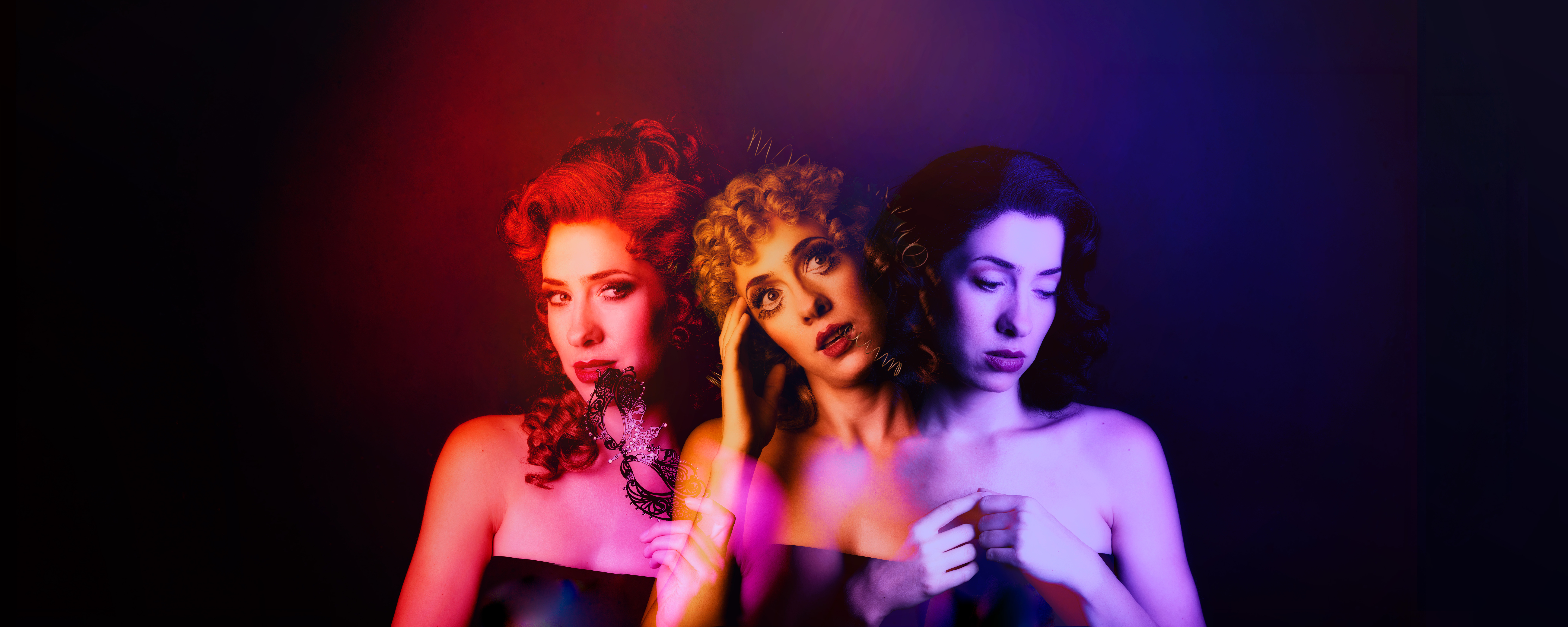
With Offenbach’s original intentions in mind, many of the roles were to share a single singer. The three women at the center of their respective acts, along with Stella, the primary and culminating love interest of the opera, were all to be sung by the same soprano; the four servants by one tenor; the four villains as one bass-baritone; and the Muse, who disguises herself as Hoffmann’s close friend Nicklausse and guides him through each story, sung by a single mezzo-soprano. These decisions were made by Offenbach to increase the dramatic unity and emphasize the effect that all of these characters are culminations of one another, not their own independent persons.
The struggle between recitative and spoken dialogue has endured over time. Originally, the contract between Offenbach and the Gaîté Theatre was for an Opéra-Lyrique, which immediately implied the opera would be fully sung. But, with a sudden contract change, the commission was reassigned to the Opéra-Comique, which by definition implied that there was to be spoken dialogue in place of recitatives. Many of the recitatives causing debate appeared in an 1885 edition, which provided more instability in who wrote them, Guiraud or Offenbach? Some scholars have argued that Offenbach did complete the score upon his death, including all of the recitatives. Historical research to inform playing practice is the most effective method to solve these issues, but the variety of editions, the input by Guiraud, and a massive fire that destroyed the archives of the Opéra-Comique in 1887, where Hoffmann was first premiered, have made that increasingly difficult. Additionally, the order of the acts has also been continuously debated. The libretto specifies the order as Olympia, Antonia, then Giulietta, but many musicians believe Antonia’s act serves as the strongest climax. Giulietta’s act is often viewed as unfinished and has undergone the most alterations since Offenbach’s death. Subsequently, slotting Giulietta’s act into the middle and moving Antonia’s to the end is perceived to help solidify the musical unity.
Over the course of the first half of the 20th century, a 1907 edition of the score by the Parisian firm Choudens became the dominant edition performed. The score included music not written by Offenbach and switched the order of the acts, publishing Antonia's and Giulietta’s acts in reverse of the original intention. Additionally, the practice of assigning the soprano roles to different singers became popular, providing an opportunity to have multiple leading sopranos but denying the work its intended dramatic unity.
Many have attempted to create an "authentic" version of Offenbach’s original score since World War II. The discovery of manuscript sources by conductor Antonio de Almeida, American researcher Michael Kaye, and Offenbach scholar Jean-Christophe Keck encouraged these various editions. In 2001 English music historian Andrew Lamb stated that there were key elements of the restorations: “the original order of acts, a single soprano heroine and single baritone villain, the identification of Nicklausse with the Muse, the restoration of the music for the latter, and the dropping of alterations by Pierre Barbier and Bloch” were necessary for a faithful representation of Offenbach’s intentions. This opinion culminated in 2011 with a joint critical edition of the score by Kaye and Keck, reconciling years of research, discoveries, and musicological debates.
Since its premiere in 1881, The Tales of Hoffmann has been through a rollercoaster of editions, lost manuscripts, vastly varying production decisions, and even an adaptation into film in 1951 by the British direction team of Michael Powell and Emeric Pressburger. This summer come see us perform Jacques Offenbach’s The Tales of Hoffmann with its original intentions intact, presenting Olympia, Antonia, and Giulietta in their intended order and with single singers for each of the multi-role parts intended by Offenbach.