
Spotlight on: Richard Strauss and DMMO
If you were to ask the average opera goer to name their favorite composer, you would probably hear the old standards of Puccini, Verdi or Mozart. You might get a Wagner, Rossini or Bizet. One name not likely to be mentioned however is Strauss—and even then it might accidentally come with a Johann (either one).
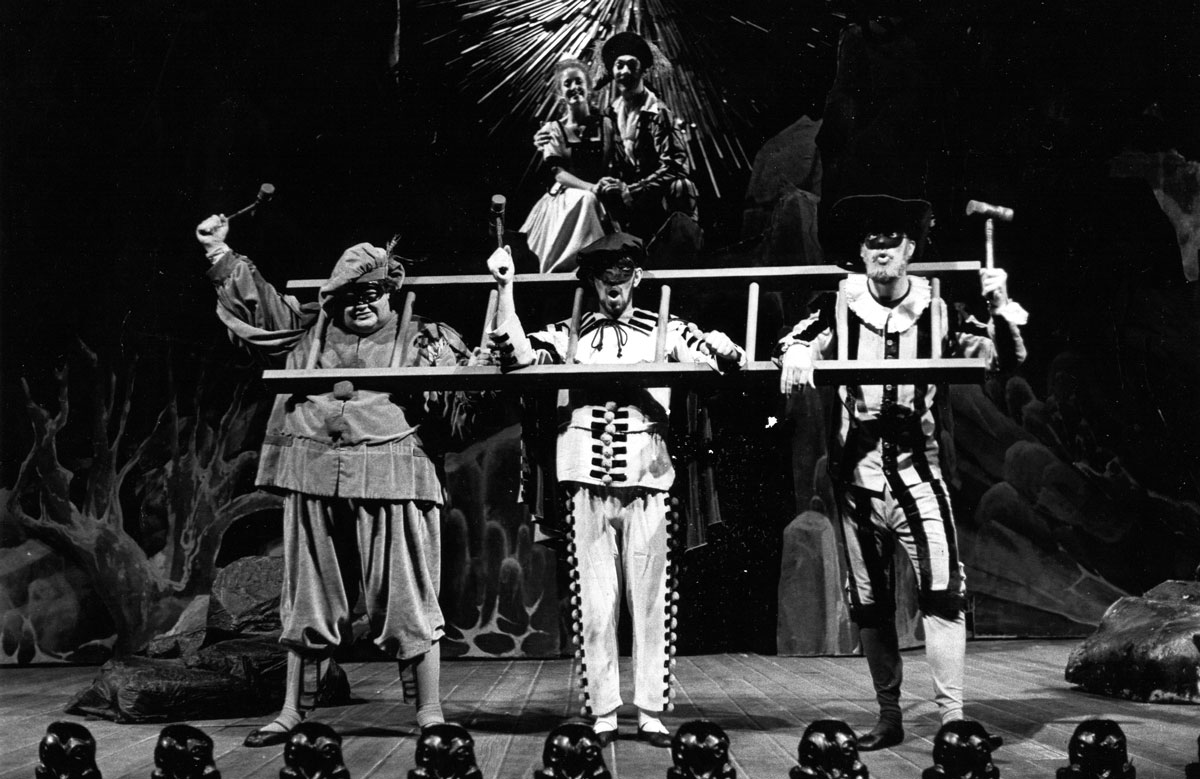
But it is Richard Strauss who composed extensively for opera, and Des Moines Metro Opera audiences have been treated to his works on five separate occasions. His Ariadne auf Naxos was produced in 1980 and 2004, Elektra in 2013, Der Rosenkavalier for the 20th anniversary season in 1992, and Salome in 2002 for the 30th.
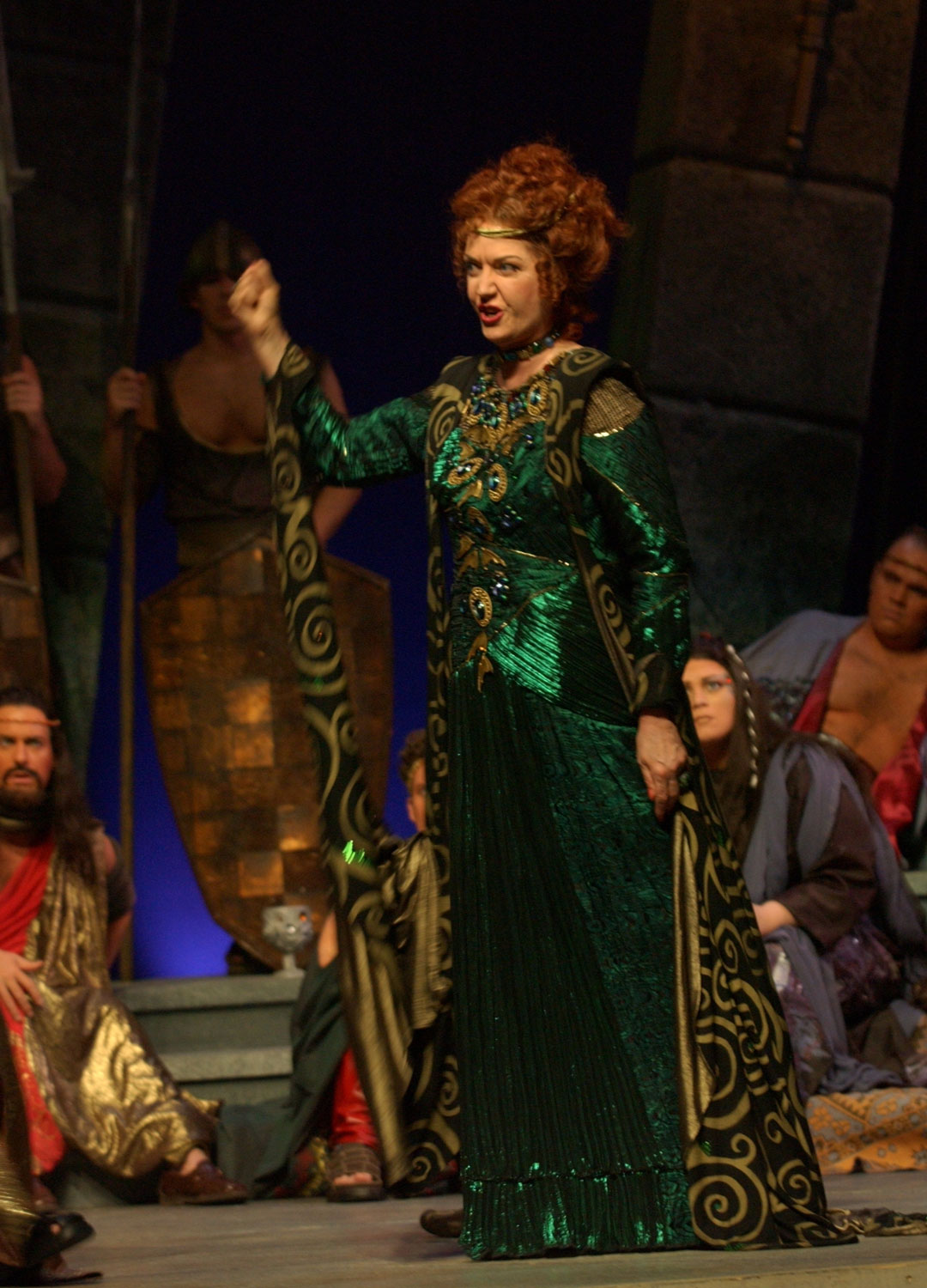
Gwendolyn Jones as Herodias in DMMO’s 2002 production of Salome. She will be reprising the role in 2024.
DMMO founder Robert Larsen called Salome “Strauss’s most original contribution to the art form” and “one of the most astonishing and musically shocking works ever written.” Indeed, the source material itself, Oscar Wilde’s play of the same name, was banned in Britain and subsequently had its 1896 premiere in Paris—while Wilde was imprisoned for indecency. No doubt this reputation overshadowed the opera, which after its premiere in Germany in 1905 was immediately banned in London and Vienna. When it finally debuted at the Metropolitan Opera in 1907, reviews were mixed, with some denouncing it as “unmentionable features of degeneracy” and others lauding Strauss as “the greatest genius of the age.” After considerable pressure from wealthy donors, however, the Met cancelled all remaining performances.
In defiance of the controversy, Salome was considered a musical triumph for Strauss. In the following years, he composed a string of successful operas that included the aforementioned Elektra (1909), Der Rosenkavalier (1911), and Ariadne auf Naxos (1912) among others. In addition to his critical acclaim as a composer, as a conductor he enjoyed what in today’s terms would be considered “A-lister status.” And after Salome dances across DMMO’s mainstage this summer, audiences will hopefully remember Strauss’s name with the likes of Puccini, Mozart and Wagner—or, at the very least, without a Johann.