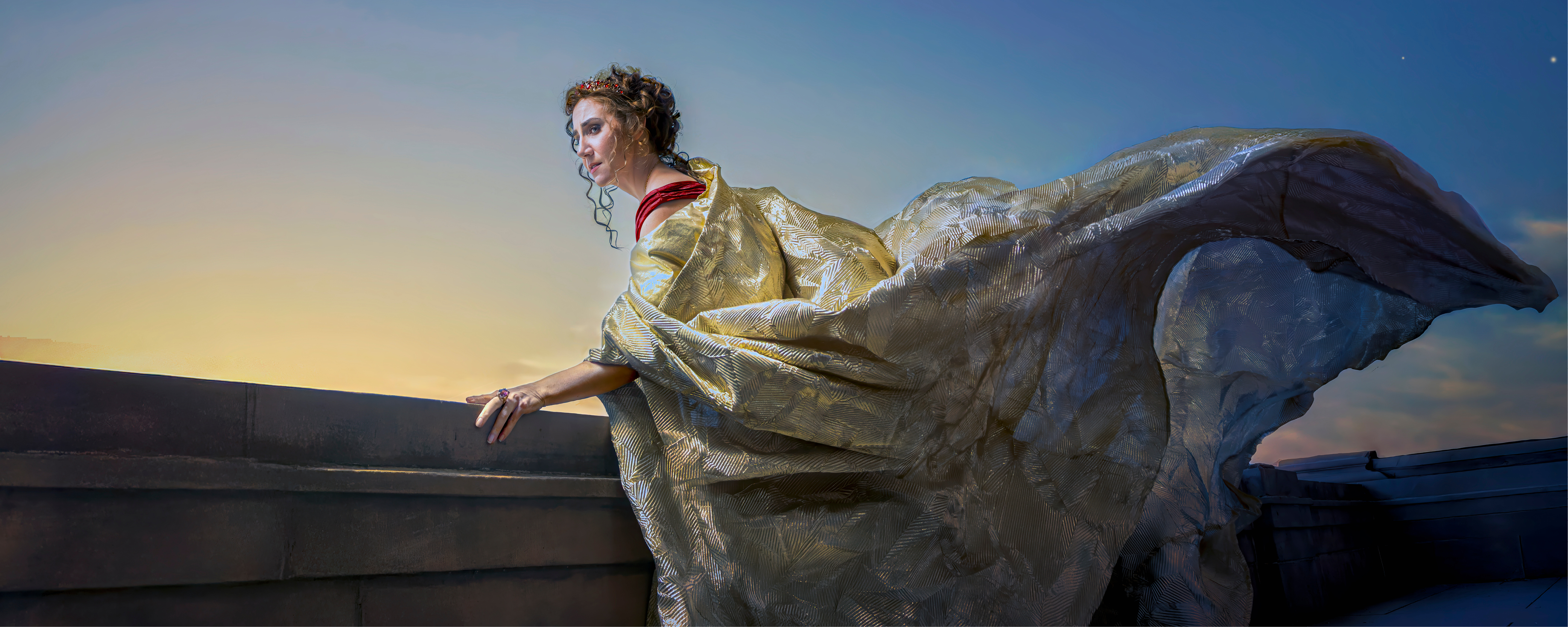
The History of Tosca
Written by Kristin Rasmussen
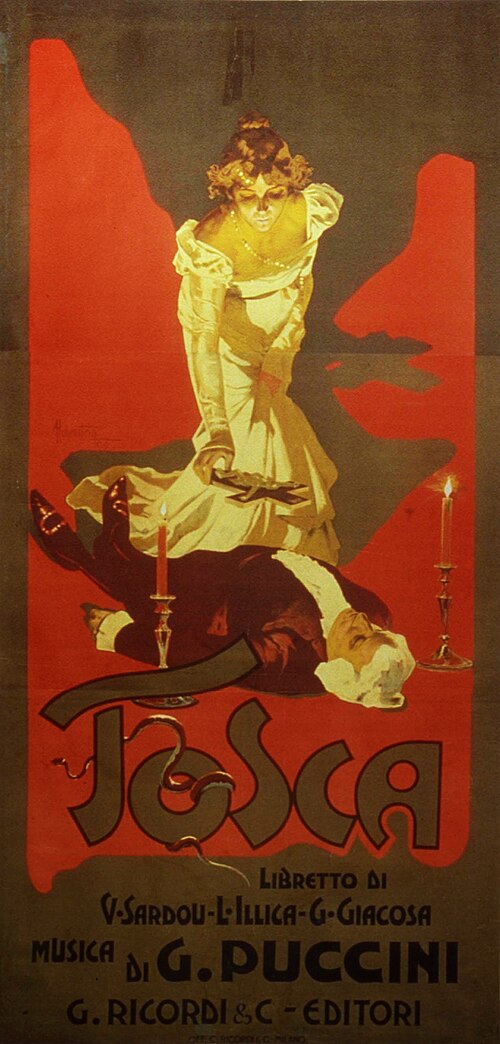
French playwright Victorien Sardou's five-act drama La Tosca premiered on November 24th, 1887, at Paris' Théâtre de la Porte Saint-Martin. Though the play itself would fade from the repertoire in the 1920s, Giacomo Puccini's operatic adaptation, Tosca, has enjoyed long-term and overwhelming success, keeping Sardou's story in the spotlight.
Victorien Sardou was born in Paris in September of 1831. His early life was spent in poverty, and after abandoning his medical studies, he attempted to establish himself in France's literary scene. Sardou's early career was unsuccessful, and it took several attempts to make any headway; instead, he was obliged to take up editing and teaching to support himself, and, after endeavoring for years, Sardou's first major success as a playwright came in 1859 with Les premières armes de Figaro. After this, Sardou’s popularity skyrocketed, and with his "well-made" plays, such as Pattes de Mouche (1860), he cemented his fame in the 1860s and went on to dominate the French theater for the rest of the nineteenth century. Sardou collaborated with composers throughout his career. Some provided incidental music or songs for his stage works, such as Jules Massenet for Théodora (1884), while others worked directly with him to create sung works for the stage, including a collaboration with Camille Saint-Saëns on the 1901 tragédie en musique Les barbares. Other composers were quickly drawn to the prospect of transforming Sardou's works into operas, and six of Sardou's other plays were adapted.
La Tosca is set in Napoleonic Rome in June of 1800, immediately following the French victory at the Battle of Marengo. Sardou was keenly aware of detail and performed thorough historical research that he used to inform his plays. His grandfather had served in Napoleon's army in Italy, and Sardou subsequently developed a lifelong fascination with the French Revolutionary Wars, setting La Tosca and six of his other plays during that time period. La Tosca takes place over the course of a single day, ending at dawn on June 18th, 1800. The plot revolves around Floria Tosca, a renowned opera singer; her lover Mario Cavaradossi, an artist and Napoleon supporter; and Baron Scarpia, Rome's cruel Head of Police, and by the end of the play, all three are dead. Scarpia arrests Cavaradossi and condemns him to death, Tosca stabs Scarpia, and she eventually commits suicide by jumping off a castle's parapet.
La Tosca was written for France’s leading actress at the time, Sarah Bernhardt, and was the third play Sardou created for her after the massive success of the first two works he wrote with her in mind. Bernhardt was cast in the titular role, alongside her lover and stage partner, Pierre Berton, as Baron Scarpia. La Tosca's opening night was a resounding success, especially for Bernhardt, who was overwhelmingly lauded by the audience. With an opening run of 200 performances in Paris, audiences immediately took to it. Quickly, La Tosca attained international success, and Bernhardt toured the play throughout the world, including performances in London, Egypt, Turkey, Latin America, and New York. Though audiences were enthusiastic, the critical response differed dramatically from the public reception; critics thought it plotless and too tailored to fit particularly Bernhardt, attributing much of its success to her performance.
After attending performances of La Tosca in early 1889, Giacomo Puccini wrote to the publisher Ricordi, pleading with him to help him acquire the rights to transform the play into an opera. In Tosca, he saw an opportunity to break away from the pattern of extravagant Grand Opera in Italy. The composer described it as "the opera I need, one with no overblown proportions, no elaborate spectacle, nor will it call for the usual excessive amount of music." Despite his initial attraction, Puccini did not return to the potential of Tosca until after the premiere of La bohème in 1895. However, at that point, another composer, Alberto Franchetti, had been recruited to craft the music. But once Puccini's enthusiasm was rekindled, Ricordi and one of Tosca's librettists, Luigi Illica, were able to persuade Franchetti to relinquish the rights, allowing Puccini to take up the work. Though he could finally start composing, he was unable to do so immediately, owing to ongoing disagreements with one of the librettists, Giuseppe Giacoso. Dissatisfied with the expansive plot and what he perceived as a lack of opportunities for lyrical expression throughout the piece, Giacoso repeatedly threatened to leave the project. Finally, in 1898, Puccini acquired a complete copy of the libretto and began working on the music.
Puccini, like Sardou, was concerned with the authenticity of detail and was thorough in his research for Tosca. He consulted directly with clergy and church musicians; he sought information on the plainsong melodies of the Roman church's Te Deum, details on the cardinal's procession, church ceremonies, and accurate costuming. He was taught the exact pitch of St. Peter's great bell and traveled to Rome to hear the matins bells of the Castel Sant'Angelo, where Act 3 takes place. Puccini also collaborated with Roman poets on some of the material, including poet Luigi Zanazzo, who offered text for the shepherd boy's song in the prelude to Act 3.
By the time Tosca was completed in October of 1899, several more disputes between the composer, librettists, and publisher had occurred. Puccini had instructed the librettists to make certain alterations, including changing an aria sung in Act 2 by Cavaradossi under torture into a quartet. He also strongly opposed Ricordi's suggestion to transform Tosca and Cavaradossi’s love duet in Act 3 into a “transcendental love duet” and treat it as the drama's climax. Ricordi thought the current dialogue to be unsatisfactory and lacking in emotion, but the composer refused to change it. Puccini believed that Tosca would be far too absorbed with the conclusion of events to waste any time, and he prevailed.
The opera's Roman setting encouraged Ricordi to arrange the premiere in the Italian capital, and Tosca debuted in Rome at the Teatro Costanzi on January 14th, 1900. At this point, the premiere of a Puccini opera was a major occasion, with many dignitaries in attendance, including Italy's queen and prime minister. Although the opera received mixed reviews, with numerous critics objecting to the viciousness of the plot, it played to crowded houses in Rome for 20 evenings. Two months later in Milan, its success was confirmed, and Tosca quickly went worldwide. Its first international performance was in Buenos Aires only 6 months after its initial premiere; by the outbreak of World War I in 1914, Tosca had been performed in more than 50 cities worldwide.
Though the opera remained largely faithful to the original drama, and the libretto received Sardou's blessing, there were several significant modifications. The number of characters is substantially reduced, and the work is trimmed to only three acts, removing most of the protagonists' political motivations. There are slight plot adjustments, such as how some of the characters meet, the reveal of the Austrian defeat at Marengo being moved far after it was disclosed in the play, and both Cavardossi's torture and Scarpia's murder being relocated to the Farnese Palace in Rome. Puccini's version also heightened the realism of Sardou's drama, which initially rebuffed some early audiences. Cavardossi's torture screams are heard from off-stage, as they are in the play, but his execution is more explicit, taking place on stage in front of the entire audience.
Tosca has remained overwhelmingly popular among audiences and singers since its premiere in 1900. As British opera scholar Julian Budden states, “its position in the central repertory has remained unchallenged. Not only is it theatrically gripping from start to finish: it presents the composer’s most varied and interesting soprano role, hence its perennial appeal for the great operatic actress.” Tosca is not just one of Puccini's most performed works, alongside La bohème and Madama Butterfly, it is also one of the most performed in the entire opera repertoire.