Composer Profile
Karol Szymanowski (1882 - 1937) by Kristin Rasmussen
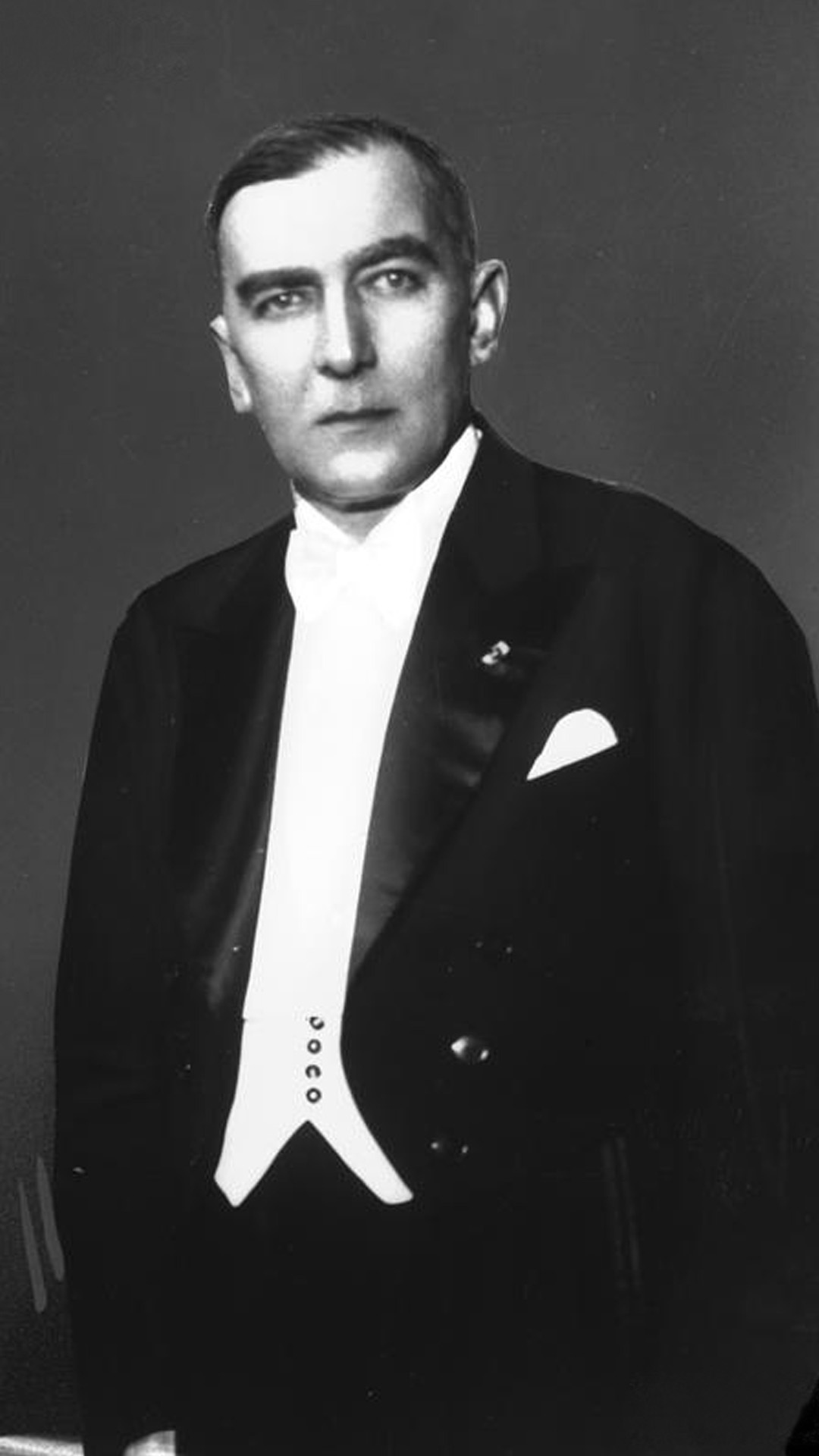
Karol Szymanowski, born in October of 1882, was raised in Polish nobility on a wealthy family estate in Kiev, modern-day Ukraine. He grew up as a member of the Russian Empire before its collapse in 1917 and as a citizen of a then non-existent Poland. His musical instruction began at home, under the supervision of his parents, before starting his professional education at the age of 10, where he was introduced to the music of Wagner, Strauss, and Scriabin.
During his teens and twenties at Warsaw's Music Institute, he collaborated with fellow students to establish the 'Young Poland' musical movement, a group analogous to the movement of the same name in Polish literature. This was a group that was heavily influenced by neoromanticism and radical aestheticism, in which art existed solely for the sake of art. The Young Poland movement further ignited Szymanowski's lifelong interest in the development of a Polish national style. During these early years, Szymanowski wrote a large body of instrumental works and songs, many of which were set to the lyrics of poets associated with the Young Poland movement. Polish Prince Władysław Lubomirski was a strong supporter of these young musicians, providing their primary funding and promoting Polish composers. The initiative culminated in a concert by the Warsaw Philharmonic Orchestra featuring a full program of music by young Polish composers. The concert was a giant success, and Szymanowski was recognized by Polish critics for the first time; nevertheless, they would quickly turn against him the following year, ushering in a volatile relationship with Polish audiences for the remainder of his life.
Szymanowski spent much of his early career in Austria and Germany, which provided the musical foundation for his early works. Wagner's music had a strong appeal for him, as illustrated by Szymanowski's frequent use of leitmotifs in King Roger. Richard Strauss also had a strong influence, and Szymanowski's 1922 opera Hagith (1922) was deeply inspired by Strauss’ Salome (1905) and Elektra (1909). In 1908, Szymanowski began visiting Italy and North Africa, with additional trips in 1910 and 1911. These trips would have a significant impact on him, as the cultures of Ancient Greece, Norman Sicily, and the Arab world had a significant influence on his composing style and creative inspirations in the years preceding King Roger. Exempt from the Russian draft, Szymanowski established a consistent schedule of uninterrupted composition that lasted from the start of the first World War to the beginning of the Russian Revolution. These few years, 1914 to 1917, were Szymanowski’s most prolific period of composition. His works were inspired by his travels, interest in Slavic styles, and the profound influence of Debussy, Ravel, and Scriabin, including his Songs of a Fairy-Tale Princess (1915) and Mythes (1915). His Violin Concerto No. 1 (1916) and Symphony No. 3 “Song of the Night” (1916) were produced during this period and represent the pinnacle of his perspective on the impressionist style, which aspired to expand the sonorities of Debussy, Ravel, late Scriabin, and the New German School's impassioned romanticism.
In 1917, the cataclysmic effects of the Russian Revolution shattered Szymanowski's world; his family's estate was demolished by the Bolsheviks, and the political instability and relocation to Elisavetgrad left Szymanowski unable to compose. Instead, he immersed himself in classical philosophy and culture, particularly the writings of Homer, Plato, and Euripides. Efebos (1918), a gigantic two-volume work that addressed religious faith and homosexual attraction, emerged from this extremely difficult period in his life; these topics, as well as its Sicilian setting, connect it strongly to King Roger.
From 1918 to 1924, King Roger (1926) consumed Szymanowski's life; he was obsessively engaged with it and saw the completion of this piece as essential to his career as an artist and composer. The blend of Greek and Christian elements in Sicily touched him deeply, having a significant impact on his creative forces and serving as the location and foundation for King Roger. The libretto was written in collaboration with Jarosław Iwaszkiewicz, Szymanowski's distant cousin and lifelong friend. The two remained close throughout their lives and shared a passion for Sicilian culture and landscapes. In some ways, the cooperation was problematic; Iwazkiewicz was less interested in the subject than Szymanowski, and both became obsessed with Polish national styles in the early 1920s. Regardless, on June 19, 1926, King Roger made its debut at Warsaw's Grand Theater.
Poverty, instability, and a battle with depression and mental illness that began in the early 1920s characterized Szymanowski's later years. He started his first stint as Rector of the Warsaw Music Institute in February 1927, but his more radical aspirations clashed with the conservatory's conservative and established philosophy. These political issues, coupled with difficulties with his emotional and physical health, meant Szymanowski's time at the conservatory ended in 1929. He resided then for a short time in Switzerland, where he tended to his health and studied and wrote a great deal, producing more than 90 articles; the foremost of these was "The Educational Role of Music in the Social Order." Between 1930 and 1932, Szymanowski's career flourished, garnering him numerous accolades and international acclaim. He served again as Rector of the Warsaw Music Institute from 1930 to 1932 before leaving due to continued political strife and poor health. With no steady income, Szymanowski was compelled to sustain himself by traveling and performing frequently, which only worsened his health issues. His last significant work, Violin Concerto No. 2 op. 61, was published in 1933. In 1936, he was forced to abandon his home in the southern Polish mountain town of Zakopane, as his health only worsened in his final days. Szymanowski suffered from deteriorating pulmonary tuberculosis, which he contracted as a child, and was a heavy smoker and drinker, particularly during his episodes of depression. In the last year of his life, Szymanowski was relocated to sanatoriums in Grasse, Cannes, and eventually Lausanne, Switzerland, where he died on Easter Sunday, March 29, 1937.